
The Name Game.
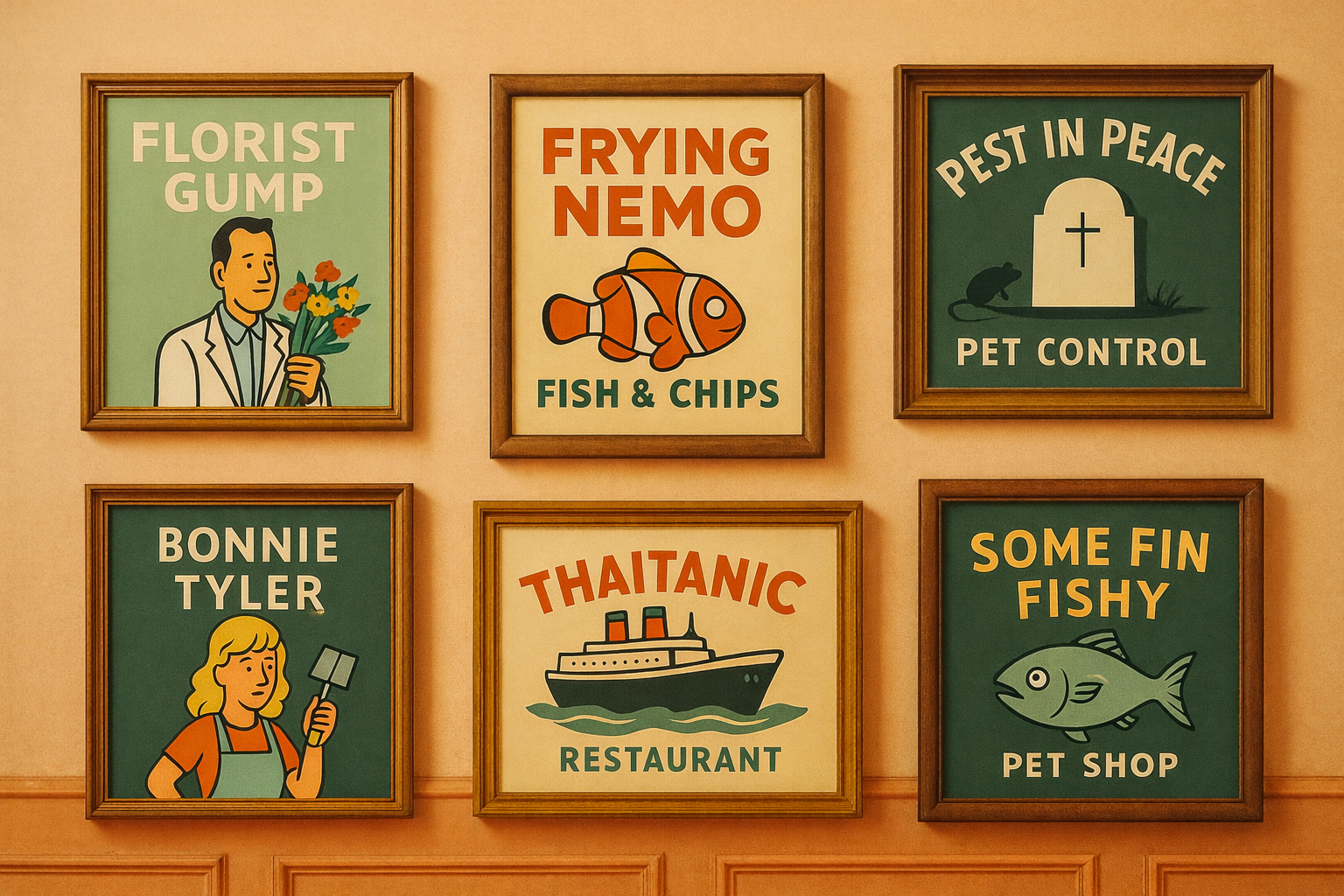
How to name a brand that actually builds one
In 1930, a Minneapolis bakery launched a new snack. They could have called it “Peanut Chocolate Caramel Nougat Delight.”
Instead, they stole the name of the founder’s family horse.
Snickers.
One syllable. Odd. Memorable. Distinctive.
Today it sells 400 million bars a year.
The horse is long gone. The name is still working.
Most names don’t build brands. They sit there. They describe. They blend in.
Which is madness, because your name is the most repeated, most visible, most durable asset you’ll ever own. It’s your single best chance at fame and fluency. So stop treating naming like a Friday brainstorm with biscuits. Treat it like brand strategy.
Here’s how:
Step 1: Build the brand before you name it
A name without a strategy is wallpaper.
Before you even open the thesaurus, be crystal clear on:
• Positioning: Are you here to defend, to challenge or to disrupt?
• Personality: Buttoned-up or bold? Playful or principled?
• Promise: What do people get and feel when they choose you?
Monzo nailed this. Before it picked a name, it picked a role: a transparent, user-first bank. That clarity freed it from “Banky McBankface” territory and gave it license for a sharp, tech-native word that stuck.
Step 2: Decide what kind of name you actually need
Not all names do the same job. Four main flavours:
Descriptive (LinkedIn, Hotels.com) - clear but dull
Evocative (Oatly, Innocent) - emotional, storytelling fuel
Invented (Google, Monzo) - memorable, ownable, heavy lifting required
Experiential (PayPal, Slack) - hint at the benefit, not the category
If you’re a new entrant, skip Descriptive. Safe names are expensive because they force you to spend years and millions buying distinctiveness you could have baked in from the start.
Step 3: Think like a memory scientist, not a poet
The job of a name isn’t to be clever. It’s to be remembered.
That means it should be:
Easy to say and spell
Distinctive against your category codes
Emotionally sticky or semantically surprising
Media-proof (spoken, written, visual)
Free of category clichés (no more “Xly” apps please)
Zoom versus BlueJeans proves the point. One is fast, fun, visual. The other sounds like a Levi’s sub-brand. Guess which one won.
Step 4: Test signals, not preferences
Naming is not a beauty contest. “Which one do you like best?” is the worst possible question.
Instead, test for:
Fluency: Is it frictionless to say, spell, search?
Association: What does it trigger in the mind?
Differentiation: Could it be mistaken for something else?
And test in context. Put it on a homepage, an outdoor poster mock-up, a cold email subject line. Nobody experiences a name in isolation.
Step 5: Future-proof it
Great names travel. Bad names trap.
Check for:
Trademark and domain availability
Social handles you can actually use
Flexibility to stretch (Dunkin’ had somewhere to go. Dunkin’ Donuts did not)
Step 6: Remember - it’s never “just a name”
A good name is not decoration. It’s a working asset. It:
Creates memory shortcuts (mental availability)
Becomes a verbal logo
Anchors brand fame campaigns
Unites teams internally
Saves millions in future marketing spend
In a world where 95% of buyers are out of market today, your name might be the only thing they do remember.
So treat it as the cheapest long-term media buy you’ll ever make.
The takeaway
Don’t think of it as naming. Think of it as the first and most powerful act of brand building.
